Where should each type of data live?
Business Central needed to remain authoritative for core commercial data while Sana handled web-specific presentation and merchandising.
A B2B commerce ecosystem connecting ERP data, customer-specific pricing, procurement platforms, content, and the web experience.




Products · customers · assortments
Enterprise punchout
Storefront · content · customer experience
Content · forms · conversion
Domains · routing · delivery
Simplified view of the systems shaping the customer experience.
What a customer could see, purchase, and pay depended on a network of customer accounts, company groups, product assortments, ERP data, storefront data, and procurement relationships.
A request that looked simple from the website could have dependencies several systems upstream. Customer identity could influence branding and pricing. Business Central controlled core customer and product rules, while Sana translated those rules into the storefront and maintained web-specific merchandising data.
Enterprise buyers could also enter through procurement platforms such as Ariba and Coupa rather than through the traditional storefront.
The challenge was not simply improving an ecommerce site. It was understanding where data lived, how each system affected the next, and how to improve the customer experience without breaking the commercial logic underneath it.
↓ View WorkI treated personalization as a dependency chain rather than a visual feature.
A signed-in user could be associated with a particular company group, which influenced the branded storefront and pricing they received. Business Central separately controlled customer assortment and whether individual items were eligible for the webstore.
Understanding that chain changed how I wrote requirements. Before asking development to change the interface, I could first determine whether the actual issue belonged to UX, storefront configuration, synchronization, master data, or ERP logic.
Three questions shaped much of the work.
Business Central needed to remain authoritative for core commercial data while Sana handled web-specific presentation and merchandising.
Pricing, product access, company relationships, and storefront presentation had to resolve into one coherent experience.
Changes had to account for synchronization, cached data, customer assignments, assortment logic, and alternate procurement paths.
Defined requirements, evaluated tradeoffs, prioritized work, and translated broad requests into executable product decisions.
Mapped relationships between Business Central, Sana, procurement platforms, customer records, and synchronization.
Led work across development, product staff, operations, internal stakeholders, and external platform partners.
Improved navigation, content, product discovery, and customer journeys while respecting the underlying commerce rules.
 123
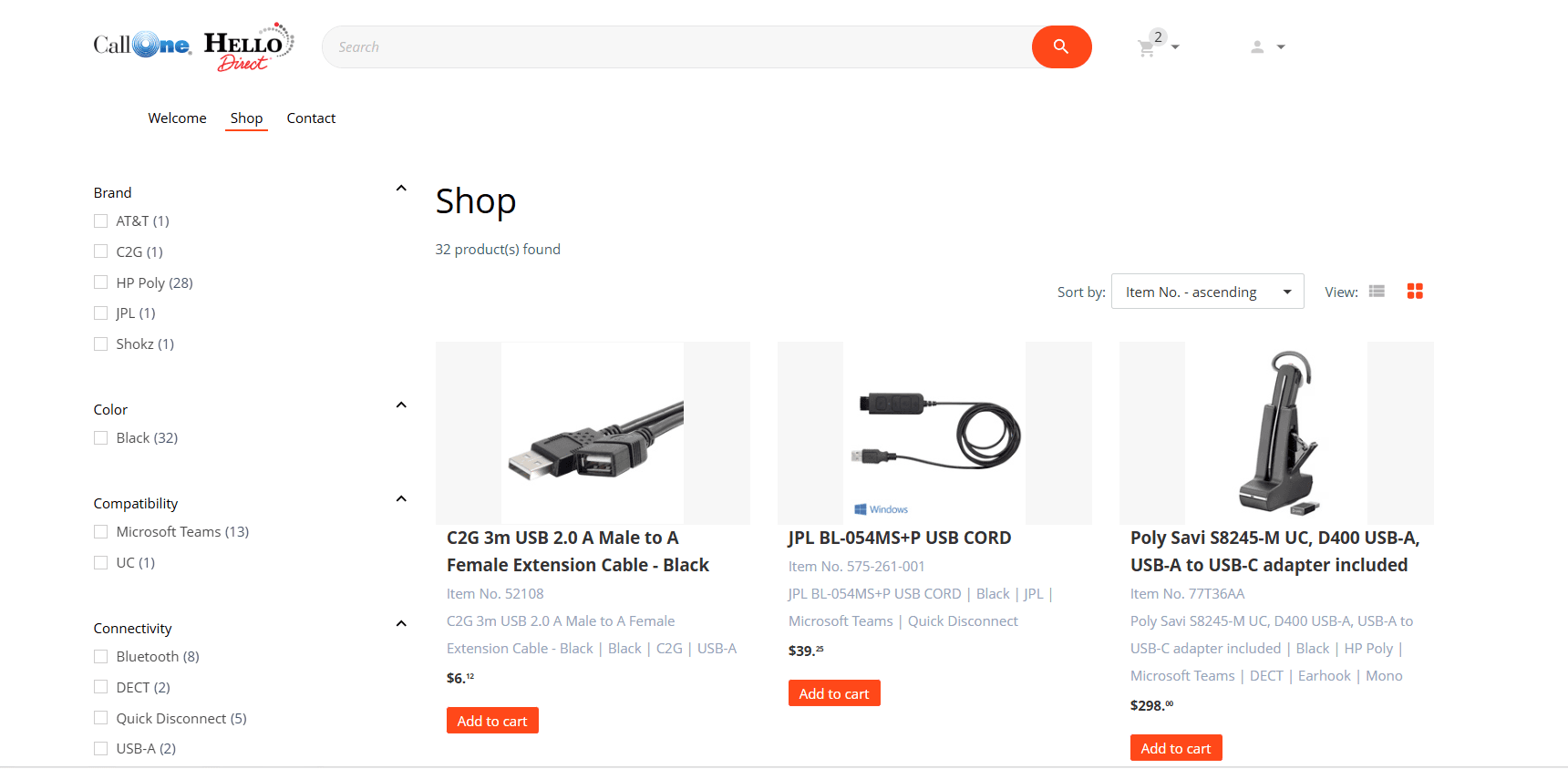
123What appeared to be a standard storefront was actually the result of customer, pricing, assortment, and product rules resolving across multiple systems.
Product synchronization could overwrite Sana-managed merchandising data, so defining system ownership was part of the product decision.
Business Central and Sana both held information that ultimately shaped the storefront, but they served different purposes.
Core commercial rules belonged upstream, while Sana gave the team more control over web-specific content and presentation. The challenge was knowing which system should own each field — and what a synchronization could change downstream.
Not every customer entered through the public storefront. Enterprise buyers could begin inside procurement platforms such as Ariba or Coupa and access the catalog through a punchout connection.
That meant the commerce experience had to work as part of a larger purchasing workflow — not simply as a standalone ecommerce website.
Buyer begins inside 3rd party procurement
Customer-specific catalog experience
Cart returns to enterprise process
Simplified flow. Exact approval and order routing can vary by customer procurement configuration.
ERP and storefront rules jointly determined customer access, products, and pricing.
Direct ecommerce operated alongside enterprise procurement through punchout integrations.
Company relationships could influence branding, assortment, pricing, and purchasing behavior.
This work changed the way I approach product decisions. A request that appears to be a simple interface change may actually depend on data ownership, synchronization, customer relationships, integrations, or an upstream business rule.
I learned to map those dependencies before choosing the solution. That helps me ask better questions, give technical teams clearer requirements, identify risk earlier, and still keep the customer experience at the center of the decision.